
Am I a Real Artist If I Paint Landscapes?
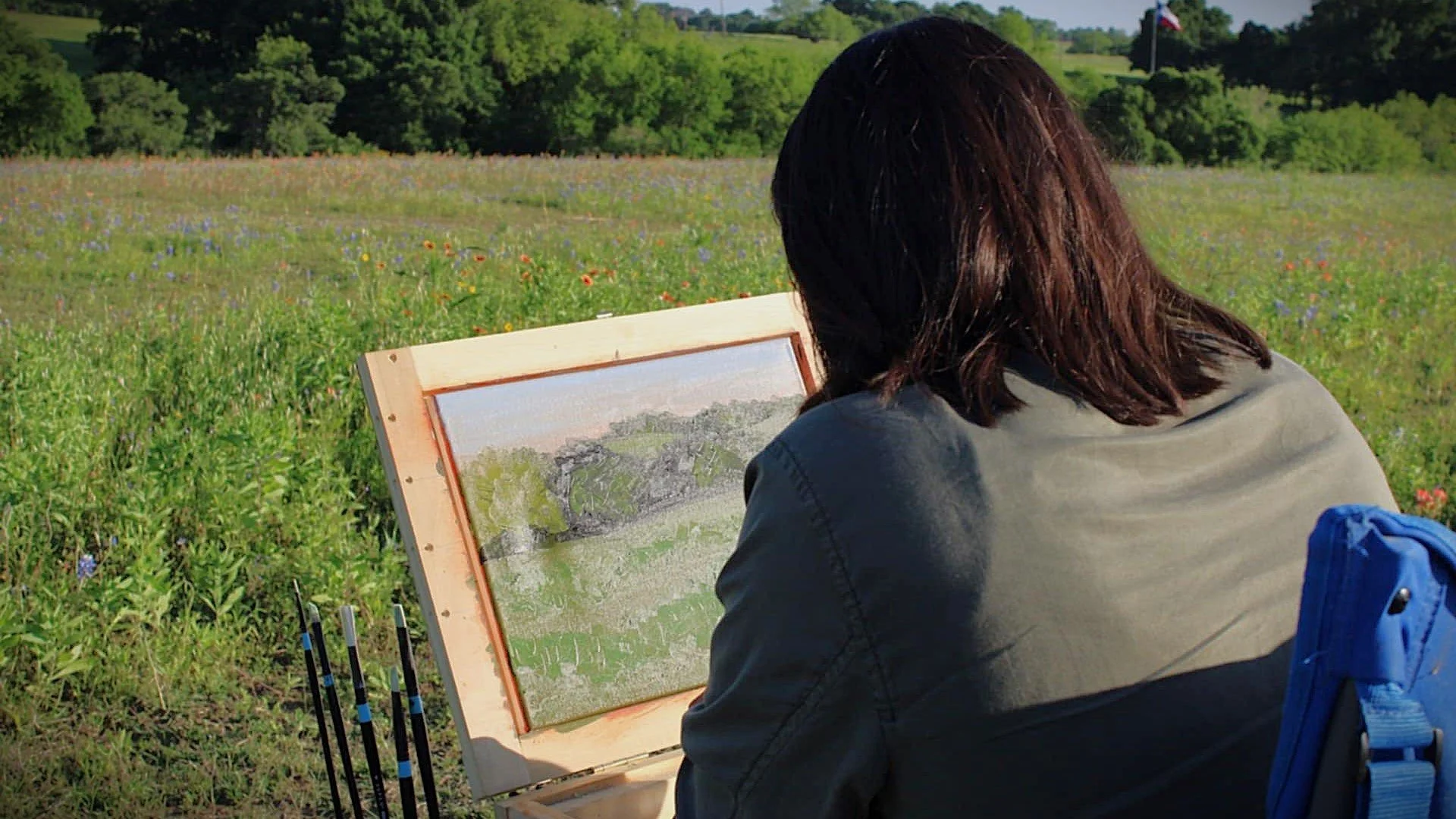
The artist painting from life in a wildflower meadow.
I am an emerging artist as of August 2025. For the past ten years, I pursued a higher degree in chemistry in my entrance to adulthood and ultimately earned my PhD in August 2025. While a rewarding experience, I chose to leave those career prospects behind for a chance to pursue my dream of being an artist. As I began searching for my voice as an artist, I found myself going back to when I was younger and first allowed to make art freely. I made some of my earliest paintings when I was sixteen after being transferred to my mother and finally having the opportunity to explore creativity. Almost all of my work then focused on nature and landscapes, with some human figures.
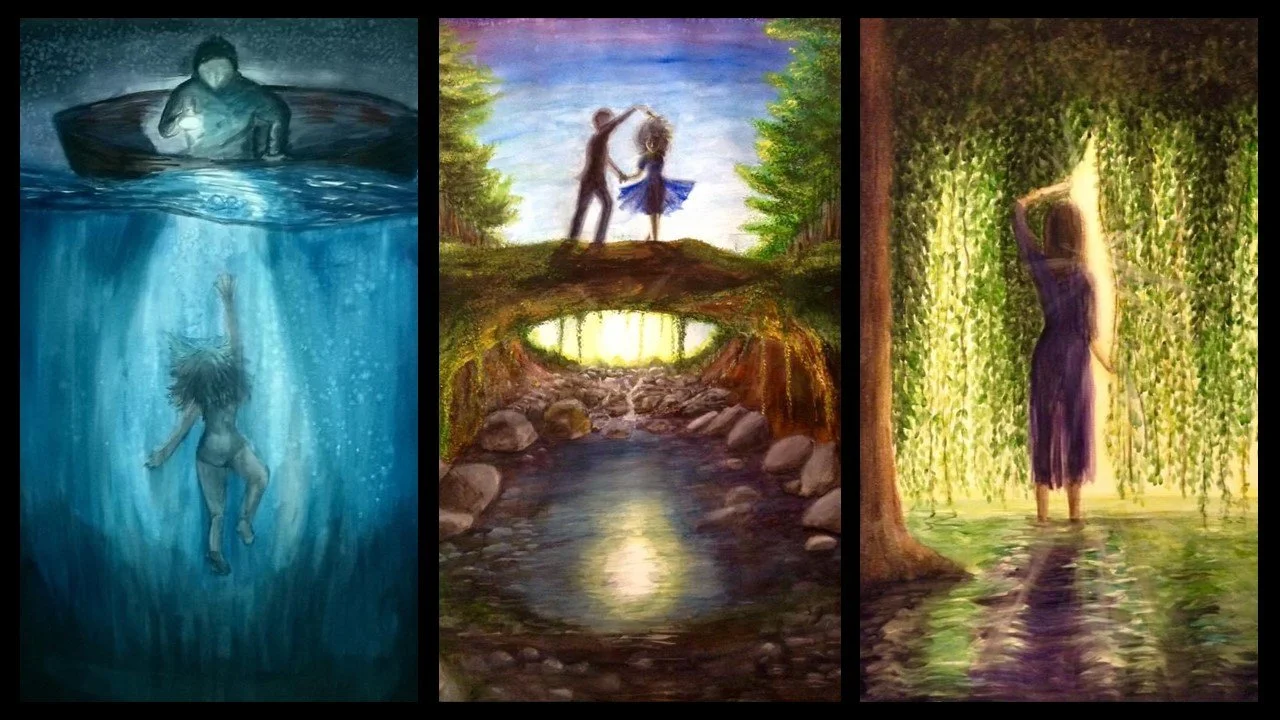
Early artwork exploring imagination and emotional expression during my teenage years, created without formal art training or exposure to the art community.
Later, during my undergraduate years in 2017 and 2018, I took two art classes as extracurriculars for my chemistry degree. Those classes centered mostly on still lifes and portrait work. Outside the classroom, working in a self driven way, I found myself making surreal realism portraits of important people in my life and exploring deeper themes around self-judgment and identity. Creating those pieces was incredibly stimulating for me and very rewarding emotionally. I continued that direction with a surreal portrait of myself in 2022 while I was in graduate school. That ended up being the only artwork I made during all of those years. I am very proud of those pieces. But even now, after finally leaving academia, I find that I have not returned to that type of work by choice yet. Instead, I repeatedly come back to wanting to paint nature.
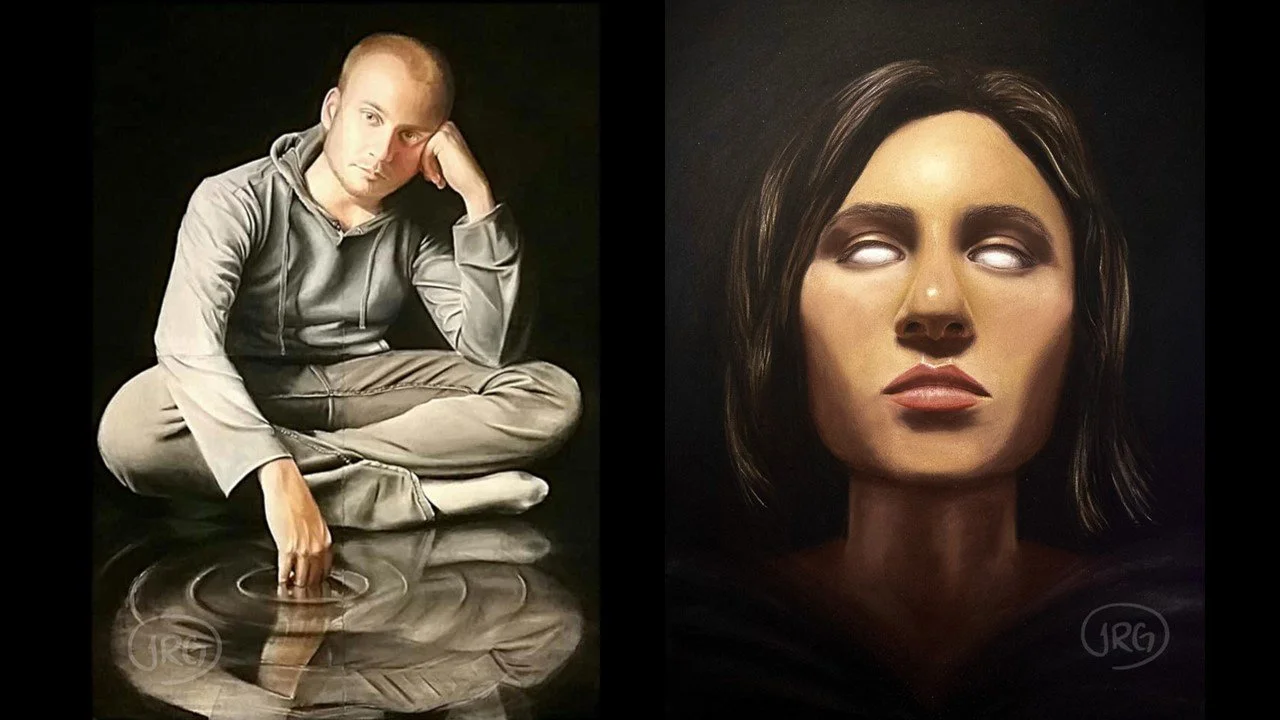
Surreal portrait work created after some art training from two extracurricular college art classes focused solely on still lifes and the human form. The painting on the right is my self-portrait. Overall during this time, I was still exploring the human form and avoided nature subjects.
Social media seems to confirm that pull. Instagram and Facebook appear convinced that nature is what I love, and the almighty algorithm may actually know me pretty well. I see breathtaking nature inspired artwork all the time. But I have also seen the darker corners of the internet where landscape artists are spoken about with real hostility. For the first time, I became aware of how often landscape art is called boring, unimaginative, safe, unchallenging, or not serious art. Discovering this made me deeply insecure. Am I a simpleton? Am I not intellectually stimulated enough, which seems absurd considering I have a PhD in chemistry? Am I boring? Do I even belong in the art world? I had already experienced how imposter syndrome can seep into every corner of your mind, and these thoughts only added to that confusion. Maybe I should try to be a different kind of artist? But then I would not be authentic… Honestly, the spiral became messy and exhausting.
These thoughts never fully went away. They stayed quietly in the background, mixed with guilt about who I was choosing to be as an artist. Then one day I listened to Samuel Earp speak about his art journey. He talked about dreaming of being outside painting trees, where it seemed that even being an arborist is not close enough. Like there is no “close enough” for an artist. Instantly I thought, “me too!” I cannot imagine a world where Samuel Earp should be doing anything other than falling in love with nature every day. Is he less of an artist because he paints landscapes? I don’t think so.
That realization made me want to share my own experiences more honestly. As part of graduate school, I spent many summers in Los Alamos, NM during internships at Los Alamos National Laboratory. I lived in the same neighborhood for several years and found myself constantly gawking at a single aspen tree near one of the houses. I think it was the way the leaves shimmered and sparkled in the wind that captured me. I remember telling one of the neighborhood kids out loud, I am going to paint that tree one day. Two years passed before I finally returned with my paints after graduating. I made a small plein air sketch of that tree. I sat there for about an hour absorbing its details in real time, the color shifts, the movement, the texture, the way the light filtered through the leaves and how the leaves sparkled as they moved. There is something incredibly intimate about that experience.
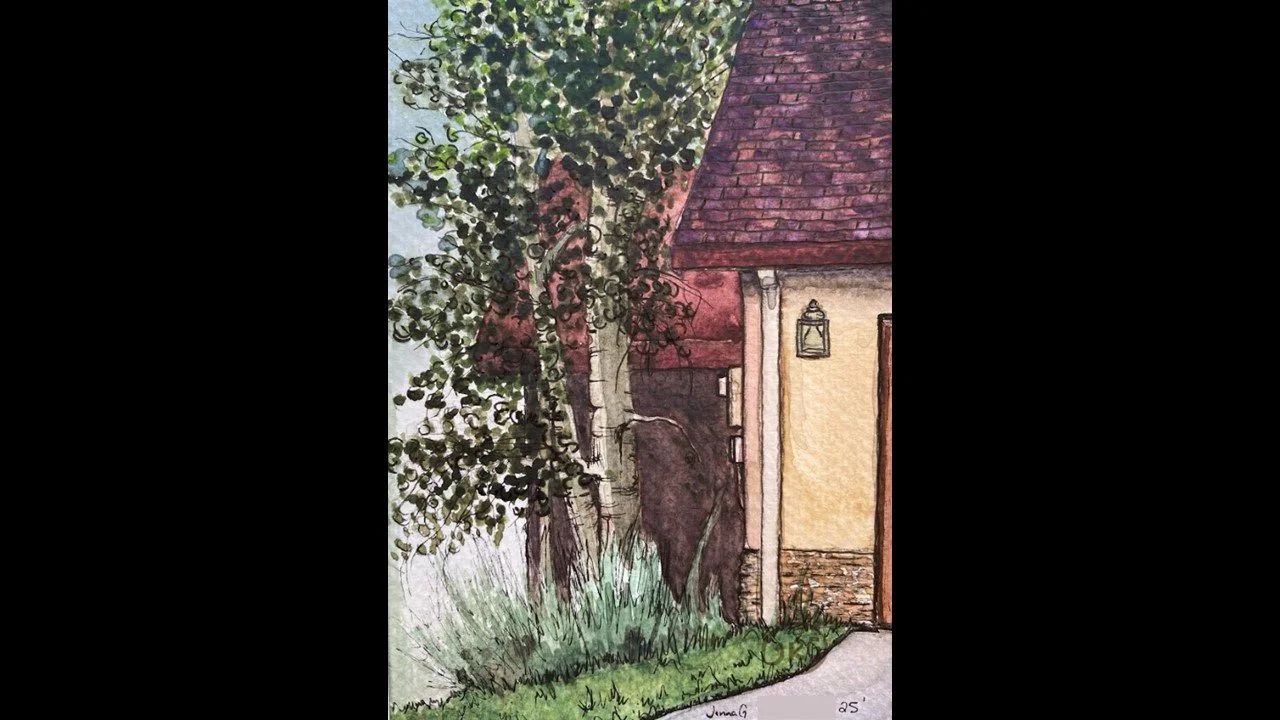
A 1-hour plein air sketch of the aspen tree in my neighborhood in Los Alamos, NM. Watercolor and pen on paper. Read more.
Two months later, the tree was cut down. I definitely cried, but also was immensely grateful because I had painted it before it was cut down. That tree still exists inside my sketchbook. In a way, it lives eternally there. I still get emotional thinking about how beautiful it was and how lucky I was to have captured it when I did.
There is another story that still hurts more. The medians along Highway 6 in College Station were filled with trees that I considered unbelievably gorgeous, especially around sunset. Every spring, wildflowers bloomed and remained un-mowed for months. Backlit, tall grasses moved constantly in the traffic winds along the frontage road. Despite being next to a highway, it felt dreamy to me. As soon as I moved to Texas six years ago, I told myself I would paint those trees someday. There were many reasons why I never got to go in the median. Graduate school kept me busy for sure. It was not really easily accessible by car since there was no shoulder. I knew the only way to get to them would be to walk or bike. It all boiled down to me admiring them on my commute to work every day. Last month (11/25), all of those trees were cut down for highway expansion. I cried about it. I never sat in that place to paint them.
I started thinking about this in a very real way because there is someone in my life who lost their mother, and the family did not take many photos. There are not many pictures of her, leaving little to look back on. Over time, they have told me that the memories of her face have slowly faded, which honestly breaks my heart. The one thing they hold onto more than anything is a voicemail she once left. It is the only recording of her voice that still exists. They keep it saved like a treasure. Every now and then they listen to it just to hear her again. That voicemail is everything. It made me realize how fragile memory is when we do not capture people and moments while they are here.
Whether through painting or photography, capturing a person from life preserves something incredibly special. It is not just about likeness. It is about presence. There is a feeling to seeing someone truly observed and recorded while they are alive that cannot be recreated afterward. Once someone is gone, trying to paint or recreate them is different. It becomes more about your interpretation of who they were and the essence you remember rather than the physical reality of them being there in front of you. Both are meaningful, but they are not the same thing.
Plein air painting creates an intense form of presence that reshapes how you see the world. It makes you hyper aware of your surroundings in a way that feels almost magical. If you have never painted outdoors, it is difficult to describe the experience fully. As Richard McDaniel once said, “working from life makes you a stronger painter, and painting from life in the open air makes you come alive!” I realize now that in our rapidly changing world, completely untouched natural spaces may become more and more rare. Even the Highway 6 corridor where I loved those trees is being changed.
My perspective on what it means to be a landscape artist continues to deepen and shift. I know there are people who believe landscape artists only paint pretty things and that the only work considered innovative must be political, social, cultural, or abstract. Never mind that landscapes can encompass all of those themes too. Those dismissive ideas can bruise an artist’s authenticity. I always thought what mattered most was being authentic and really experiencing the world. Aren’t I supposed to be painting with all the colors of the wind??
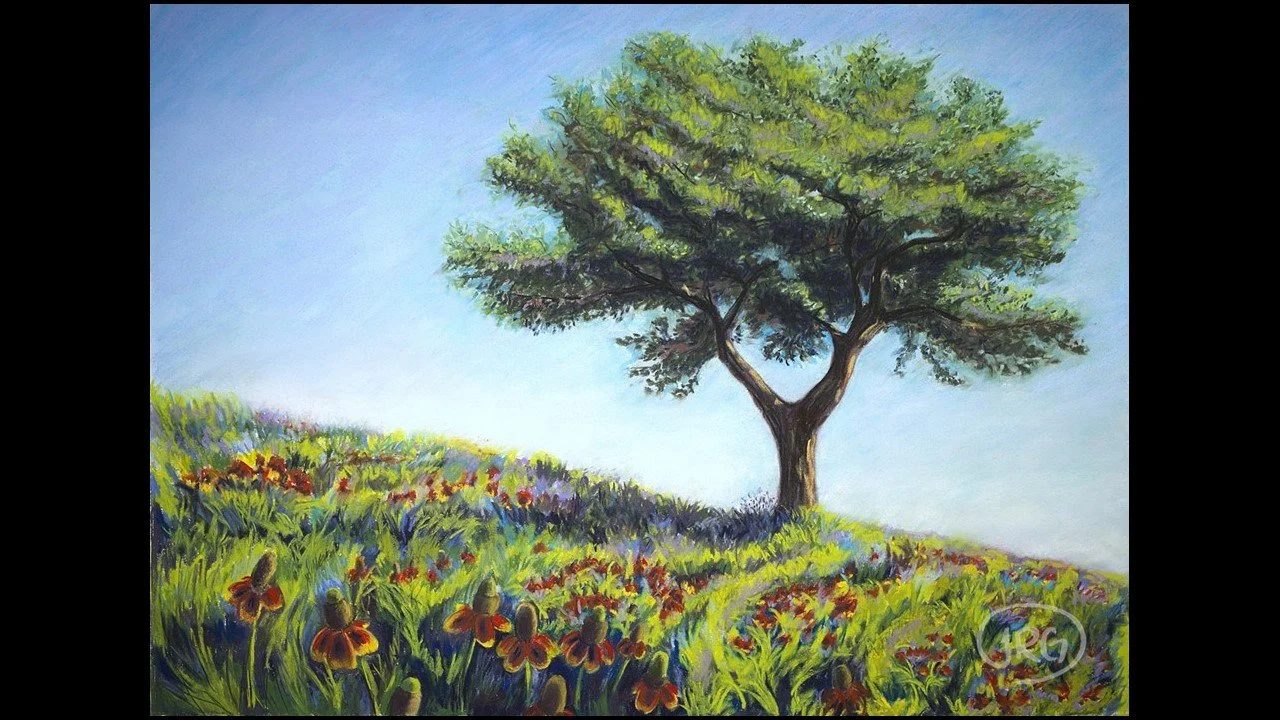
“The Tree on the Hill"
Soft Pastel on Rives BFK Paper, dimensions: 22”x30”
Inspired by one of my plein air works painted during a time of immense stress as I prepared for my PhD defense (05/25). I tried my best to paint with all of the colors of the wind in this example to reflect on how distraught I was that day. Read more.
I do not have endless time to be alive. I already feel like I began this journey late. I want to show people why a particular tree changed how I felt about life. I want to show why a field of grass made me finally happy to be alive. I want to show why the sound of wind moving through tall grasses made me choose to step away from a career in science. I want to show why one wildflower smiling at me could bring more joy than the promise of a six figure salary. Authentic people feel harder to find in the era of social media where everyone is telling you who to be and what to create. I do not have time to worry about any of that anymore. I need to experience the world fully and share my discoveries unapologetically.
I believe the human connection to nature is deeply personal, just as our connections to one another are. The people in our lives are irreplaceable, and we learn to adore the tiny details that only we notice. My favorite freckles on my partner’s cheek or shoulders. Or the curve of his nose. Why should landscapes be treated any differently? I want artists to show me every detail of their favorite rock even though I have seen rocks before. Show me how you saw that tree differently than I did. I have heard a thousand stories of love and heartbreak, but I would still gladly listen to yours because the details are what make each one unique.
At the end of the day, all artists are participating in the same human act of noticing and becoming fascinated with small, meaningful details. We are all contributing to this shared condition of paying attention to the world and trying to translate what we experience. No subject stands higher than another in that pursuit. I wish we could stop dividing ourselves and simply honor the countless individual ways we see and express ourselves.
